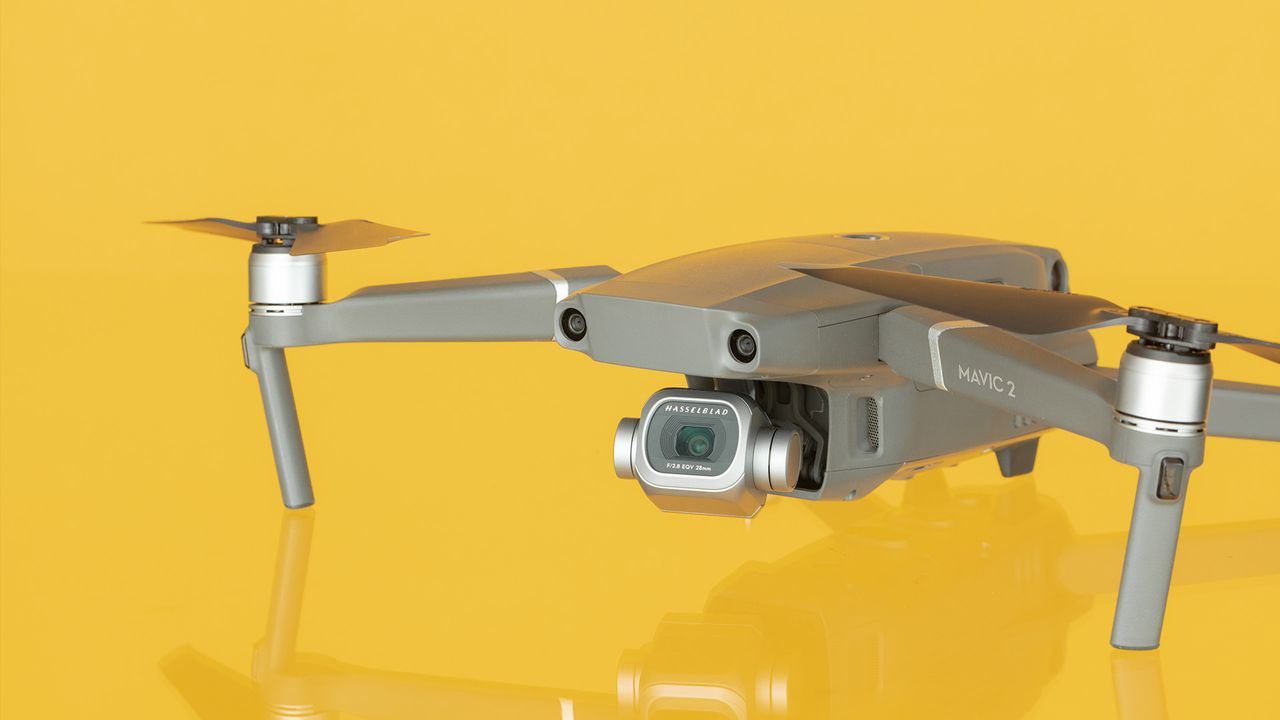
USAF is buying banned DJI drones to train its operators against the 'most statistically probable real-world threat'
US Air Force buys banned DJI drones to train against likely hostile aircraft F.E.
<![CDATA[ <article> <ul><li><strong>US Air Force buys banned DJI drones to train against likely hostile aircraft</strong></li><li><strong>F.E. Warren base will use DJI aircraft for counter-drone security drills</strong></li><li><strong>RIZER software will isolate the DJI drones before they enter training</strong></li></ul><p>The US Air Force plans to buy DJI drones for counter-drone training at F.E. Warren Air Force Base in Wyoming.</p><p>The purchase involves Chinese-made <a href="https://www.techradar.com/cameras/drones/best-drone">drones</a> that security forces will use to rehearse responses against drones encountered during actual threats.</p><p>F.E. Warren operates Minuteman III missiles, making protection against airborne incursions an important part of its security mission.</p><h2 id="air-force-seeks-restricted-dji-drones-for-realistic-training">Air Force seeks restricted DJI drones for realistic training</h2><p>The 90th Contracting Squadron issued a solicitation for banned DJI drones on August 14 2026, with vendor quotes due August 24 for the planned purchase.</p><p>The order seeks two refurbished <a href="https://www.techradar.com/reviews/dji-mavic-2-pro">DJI Mavic 2 Pro quadcopters</a> with Fly More kits for training at the missile base.</p><p>It also requests two <a href="https://www.techradar.com/reviews/dji-mini-3-pro">DJI Mini 3 Pro</a> drones, two <a href="https://www.techradar.com/cameras/drones/dji-avata-2-review">DJI Avata 2</a> Fly More combos and six payload release devices.</p><p>The Air Force says these systems will support counter-small unmanned aircraft training involving detection, electronic warfare and methods for defeating drones.</p><p>Officials specifically require <a href="https://www.techradar.com/best/best-dji-drone">DJI drones</a> because its radio signals and flight systems differ from those found on competing devices.</p><p>“To properly test our counter-systems and train our operators against the most statistically probable real-world threat, the 90 MSOS must utilize the exact devices adversaries are most likely to employ,” the justification states.</p><p>Using different systems could leave operators without practical experience against DJI communication methods and radio frequency signatures.</p><h2 id="how-the-banned-drones-will-be-used">How the banned drones will be used</h2><p>The procurement is designated as a brand-name requirement, meaning the Air Force specifically seeks DJI hardware rather than comparable models.</p><p>However, the document says several authorized DJI resellers can satisfy the requirement, allowing the purchase under a small-business set-aside.</p><p>The procurement therefore does not necessarily mean the government will award the contract directly to DJI itself.</p><p>The purchase also addresses cybersecurity concerns because DJI aircraft have faced restrictions within parts of the U.S. government.</p><p>The justification cites a Secretary of War memorandum called “Unleashing U.S. Military Drone Dominance” as authority for limited purchases.</p><p>That authority permits colonels and equivalent officers to obtain small quantities of foreign drone equipment for electronic warfare testing.</p><p>The cited legal basis is 10 U.S.C. 2304(c)(1), which permits single-source solicitation under specified circumstances.</p><p>Before operational use, each aircraft will receive RIZER software intended to prevent communications with foreign entities or Department of War networks.</p><p>The document describes RIZER as replacing the aircraft's native firmware and creating an air-gapped system for training operations.</p><p>F.E. Warren is not alone, since Malmstrom Air Force Base in Montana is reportedly pursuing similar DJI aircraft for counter-drone training.</p><p>Using the same drone type at both missile bases would allow Global Strike Command to replicate similar threat conditions.</p><p>Whether that approach provides sufficient value depends on how closely the modified aircraft retain DJI's original signals and operating characteristics.</p><p>Via <a href="https://defence-blog.com/u-s-air-force-buys-chinese-made-drones-for-nuclear-missile-base/" target="_blank" rel="nofollow">Defence Blog</a></p><figure class="van-image-figure inline-layout" data-bordeaux-image-check ><div class='image-full-width-wrapper'><div class='image-widthsetter' style="max-width:676px;"><p class="vanilla-image-block" style="padding-top:31.51%;"><img id="diM9tpwF2Lz85R8q85CT78" name="tr-g_news" alt="Google logo on a black background next to text reading 'Click to follow TechRadar'" src="https://cdn.mos.cms.futurecdn.net/diM9tpwF2Lz85R8q85CT78.jpg" mos="" align="middle" fullscreen="" width="676" height="213" attribution="" endorsement="" class="inline"></p></div></div></figure> </article> ]]>
Read the full article on TechRadar
Read Full Article →