Samsung unveils next-gen OLED tech that hits 10,000 nits of brightness — but the bit you should be excited about is the 30% efficiency improvement
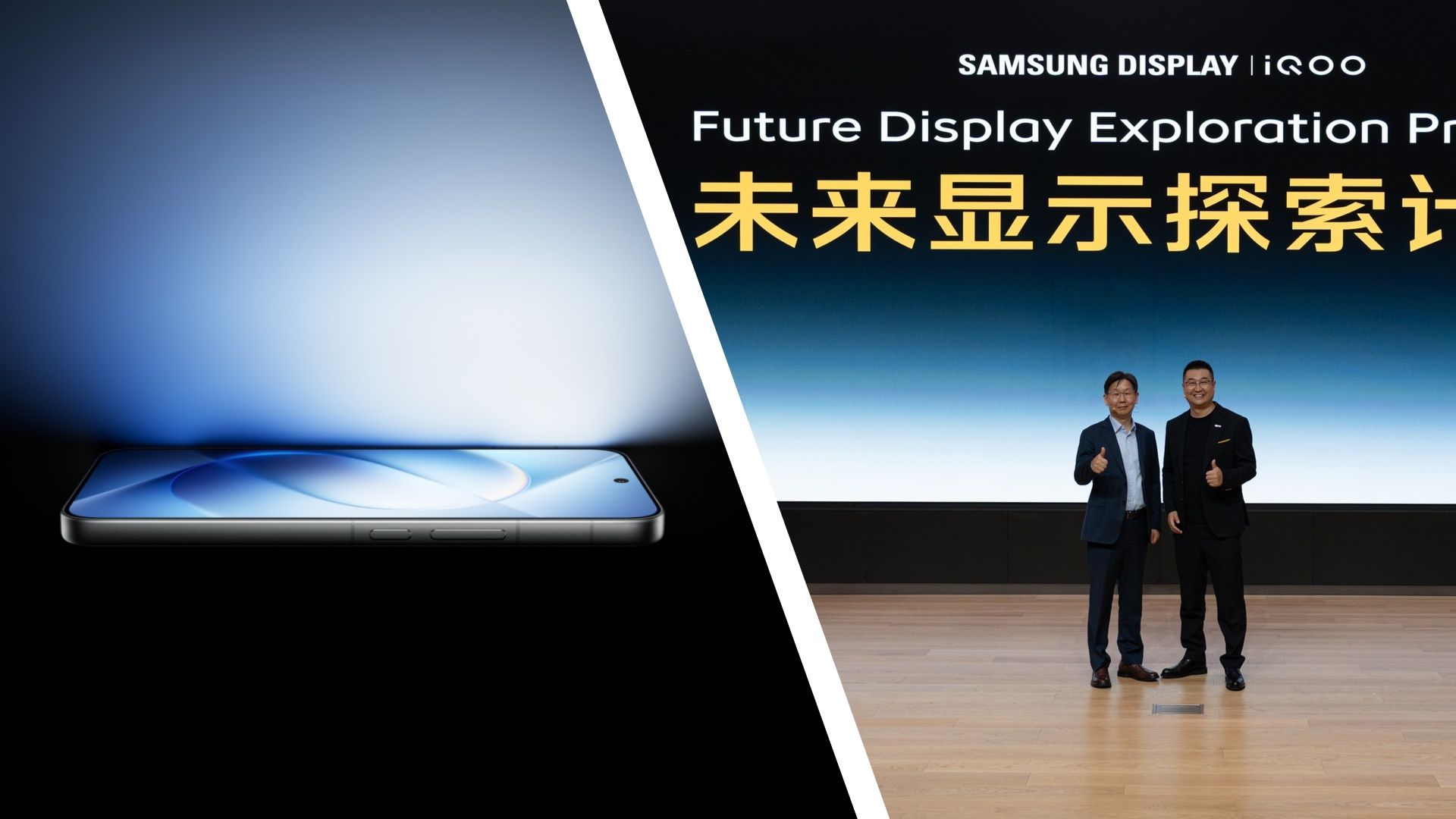
Samsung Display unveils new 'M16' OLED phone screen tech that can hit 10,000 nits of brightness in small areas The more useful news is that it can be 30% more efficient than its previous-gen M14 OLED tech It's appearing first in the Vivo iQOO 16 phone, in China Samsung Display has unveiled the first
<![CDATA[ <article> <ul><li><strong>Samsung Display unveils new 'M16' OLED phone screen tech that can hit 10,000 nits of brightness in small areas</strong></li><li><strong>The more useful news is that it can be 30% more efficient than its previous-gen M14 OLED tech</strong></li><li><strong>It's appearing first in the Vivo iQOO 16 phone, in China</strong></li></ul><p>Samsung Display has unveiled the first OLED panel to deliver 10,000 nits of peak brightness, and it's already coming in a phone. </p><p>The new 'M16' OLED display is capable of 10,000 nits in 1% of the window, although in full screen it puts out a less searingly bright (but massively impressive) 2,800 nits. These numbers put it in the region of micro-LED tech, and way beyond anything we've seen for OLED so far.</p><p>Of course, brightness is all well and good, though few people are probably begging for their phone to be as bright as a full sunny day. What's arguably more exciting is that the panel is Samsung's second-generation polarizer-free OLED, which enables it to deliver significantly improved energy efficiency and brightness — the claim is a 30% improvement in efficiency.</p><p>This means that even if you view it more like the 1,000 nits of most elite phones, you're saving way more battery — and since the display is one of the biggest battery hogs in phones (or the <a href="https://www.techradar.com/news/wearables/best-smart-watches-what-s-the-best-wearable-tech-for-you-1154074">best smartwatches</a>, where the tech would also be really useful), that could make a real difference to phone longevity.</p><p>The M-series panels are made for smartphones and other mobile devices, but the advances in OLED material here may make their way into the <a href="https://www.techradar.com/televisions/the-best-oled-tvs">best OLED TVs</a> too, at least partly. </p><div class="see-more see-more--clipped"><figure><blockquote class="twitter-tweet hawk-ignore" data-lang="en" cite="https://twitter.com/cantworkitout/status/2099308905398702096"><p lang="en" dir="ltr">BREAKING! Samsung Display × iQOO are holding a joint launch event, and the M16 OLED display has reached an incredible peak brightness of 10,000 nits! https://t.co/ihjmlknl2X<a href="https://twitter.com/cantworkitout/status/2099308905398702096">September 14, 2026</a></p></blockquote></figure><div class="see-more__filter"></div></div><h2 id="where-to-see-samsung-display-39-s-new-ultra-bright-oled">Where to see Samsung Display's new ultra-bright OLED</h2><p>According to industry site <a href="https://www.flatpanelshd.com/news.php?subaction=showfull&id=1789625752" target="_blank">FlatpanelsHD</a>, Samsung Display will be providing the M16 OLEDs to Vivo for its iQOO 16 gaming phone. </p><p>Previous reports also suggest that Apple is using the M16 in its <a href="https://www.techradar.com/phones/iphone/iphone-18-pro-and-iphone-18-pro-max-review">iPhone 18 Pro</a>, as Apple has previously used even-numbered M-series OLEDs in its iPhones. My colleague <a href="https://www.techradar.com/phones/iphone/the-iphone-18-pros-game-changing-feature-isnt-the-variable-aperture-camera-special-version-of-siri-ai-or-desktop-class-processor-its-that-huge-leap-in-battery-life">Matt Bolton highlighted the longer battery life in the iPhone 8 Pro as one of its, uh, highlights</a> — noting that battery improvements usually come from multiple elements combining, so it would makes sense if this new display is one of those elements.</p><p>For TV buyers, the most significant thing here is how fast OLED tech is evolving. Samsung announced its first 5,000 nit OLED in March 2025, and it's doubled the brightness and massively increased the energy efficiency in just over a year. </p><p>It'll be some time before these more efficient displays make their way to monitors and TVs (monitors might come sooner), and there are currently trade-offs involved — the lack of a polarizer can mean less defined contrast and black levels, which may be Apple is adding other anti-reflective tech to its displays — but clearly, any so-called <a href="https://www.techradar.com/televisions/will-micro-led-ever-really-replace-oled-the-next-gen-tv-tech-takes-a-blow-as-samsungs-tv-boss-pulls-back-from-investing-in-making-it-its-a-bad-sign-but-will-tcl-and-hisense-keep-the-flag-flying">OLED killers</a> can't be complacent when OLED is evolving at such a speed.</p><div data-widget-type="review" data-model-name="Apple iPhone 18 Pro"></div> </article> ]]>
Read the full article on TechRadar
Read Full Article →