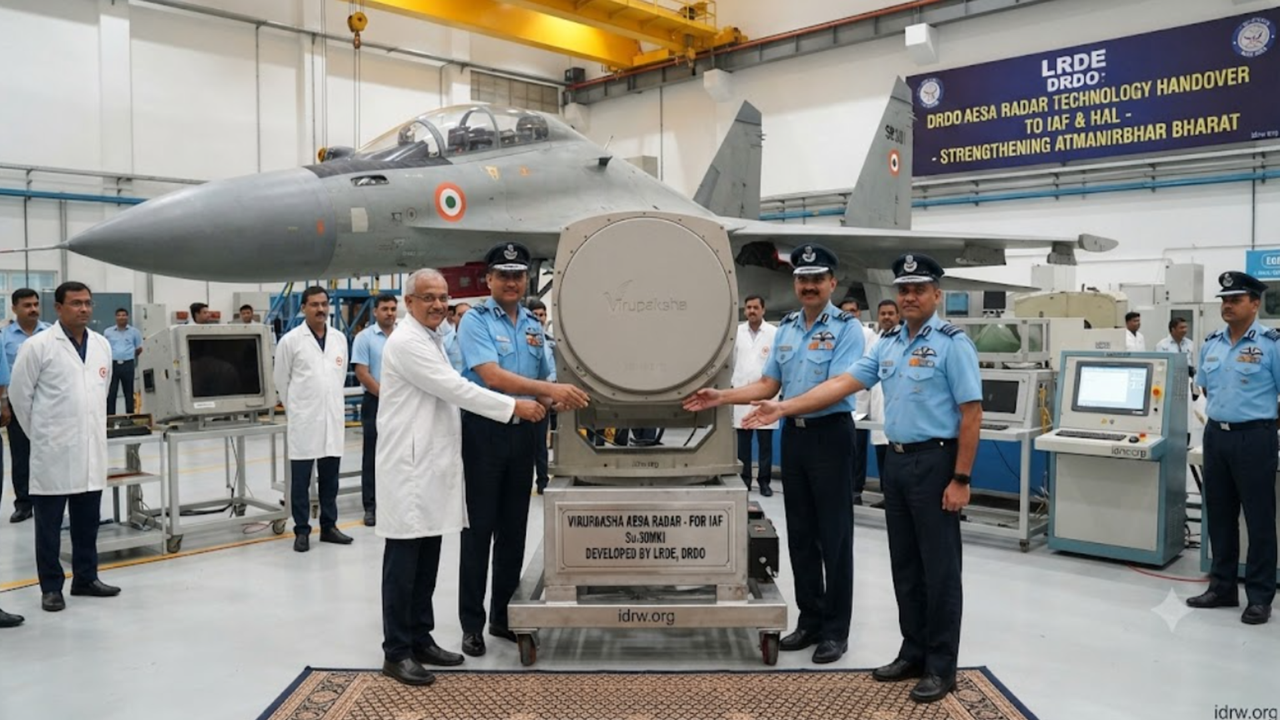
India is replacing the Su-30MKI's ageing Russian radar with Virupaksha The new radar could detect conventional fighters 300 to 400 kilometres away Virupaksha is expected to detect stealthier aircraft beyond 200 kilometres India's Su-30MKI fleet, built on a Russian airframe design, is now getting a d
<![CDATA[ <article> <ul><li><strong>India is replacing the Su-30MKI's ageing Russian radar with Virupaksha</strong></li><li><strong>The new radar could detect conventional fighters 300 to 400 kilometres away</strong></li><li><strong>Virupaksha is expected to detect stealthier aircraft beyond 200 kilometres</strong></li></ul><p>India's Su-30MKI fleet, built on a Russian airframe design, is now getting a distinctly homegrown upgrade to its detection system.</p><p>The Defence Research and Development Organisation is developing a new radar called Virupaksha to replace the aircraft's ageing Russian-origin unit.</p><p>This radar swap forms a core element of the broader Super Sukhoi modernisation programme currently awaiting final government clearance.</p><h2 id="indian-radar-could-transform-the-su-30mki-s-detection-capabilities">Indian radar could transform the Su-30MKI's detection capabilities</h2><p>The Super Sukhoi programme aims to elevate the aircraft to a more advanced fighter jet class through this sensor overhaul.</p><p>In simple terms, that means the jet would gain sharper detection abilities without needing an entirely new airframe.</p><p>Indian officials have estimated the cost for an initial batch of 84 aircraft at ₹60,000 to ₹65,000 crore (about $6 billion), but it still awaits final approval from the Cabinet Committee on Security.</p><p>Astra Microwave Products, a private contractor, is building a key radar component, the Active Antenna Array Unit (AAAU), alongside DRDO engineers.</p><p>The AAAU works like the radar's eyes, scanning the sky for threats electronically instead of using a spinning dish.</p><p>It houses roughly 2,400 small transmitting and receiving parts made from a material called Gallium Nitride, which is more power-efficient than older materials.</p><p>In practical terms, this material lets the radar see farther, run cooler, and resist enemy jamming more effectively than older designs.</p><p>It also keeps the whole unit relatively lightweight, which matters when fitting new technology into an existing aircraft.</p><p>Once complete, the radar is expected to detect conventional fighter-sized aircraft between 300 and 400 kilometres away.</p><p>Against stealthier aircraft designed to evade detection, its range is still expected to exceed 200 kilometres, a major improvement over the current system.</p><h2 id="virupaksha-radar-moves-closer-to-completion">Virupaksha radar moves closer to completion</h2><p>Astra Microwave has told investors that its portion of the radar programme remains on schedule for completion within months.</p><p>The company expressed hope that the full Virupaksha radar system could be finished by the end of this year.</p><p>"The Active Antenna Array Unit remains on schedule despite the scale and complexity of the underlying technology," said a company spokesperson.</p><p>Completing this radar on time would mark a meaningful milestone for the wider Super Sukhoi modernisation effort.</p><p>It would also suggest that India's domestic defence electronics industry can deliver advanced radar systems without major delays.</p><p>Whether the full 84-aircraft upgrade eventually proceeds still depends on Cabinet approval and future budget decisions.</p><p>Until that approval arrives, the radar's fabrication progress remains the clearest sign of how quickly the broader programme is moving forward.</p><p>For a country still reliant on imported fighter jet technology, a homegrown radar like this represents a notable shift in capability.</p><p>It shows India attempting to pair a foreign-designed airframe with an increasingly self-built sensor and detection system. </p><p>Via <a href="https://idrw.org/iaf-super-sukhoi-upgrade-virupaksha-aesa-radar-fabrication-expected-to-finish-by-year-end/" target="_blank" rel="nofollow">IDRW</a></p><figure class="van-image-figure inline-layout" data-bordeaux-image-check ><div class='image-full-width-wrapper'><div class='image-widthsetter' style="max-width:676px;"><p class="vanilla-image-block" style="padding-top:31.51%;"><img id="diM9tpwF2Lz85R8q85CT78" name="tr-g_news" alt="Google logo on a black background next to text reading 'Click to follow TechRadar'" src="https://cdn.mos.cms.futurecdn.net/diM9tpwF2Lz85R8q85CT78.jpg" mos="" align="middle" fullscreen="" width="676" height="213" attribution="" endorsement="" class="inline"></p></div></div></figure> </article> ]]>