Inkjet-printed OLED screens are reportedly in mass production at long last — here's why that's great news for monitor, laptop and even TV pricing
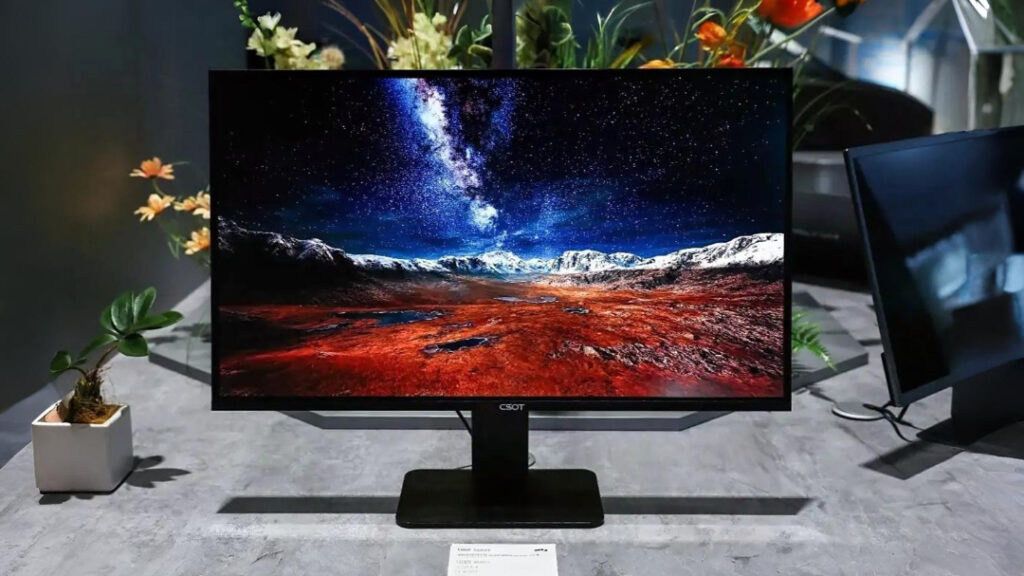
TCL CSOT is reportedly now mass producing the first inkjet-printed OLEDs for consumers MSI just revealed a new 27-inch monitor which seemingly uses this 4K panel Inkjet printing is a more affordable way of making OLEDs and it will usher in cheaper monitors and laptops, and eventually TVs further dow
<![CDATA[ <article> <ul><li><strong>TCL CSOT is reportedly now mass producing the first inkjet-printed OLEDs for consumers</strong></li><li><strong>MSI just revealed a new 27-inch monitor which seemingly uses this 4K panel</strong></li><li><strong>Inkjet printing is a more affordable way of making OLEDs and it will usher in cheaper monitors and laptops, and eventually TVs further down the line</strong></li></ul><p>TCL CSOT has seemingly taken a big step towards putting inkjet-printed OLED panels in the homes of consumers, and mass production of these screens is now reportedly underway.</p><p><a href="https://www.oled-info.com/tcl-csot-starts-producing-27-4k-inkjet-printed-oled-monitor-panels-its-55-gen" target="_blank">OLED-Info reports</a> that the Chinese manufacturer has kicked off production with an initial 27-inch 4K panel with a refresh rate of 120Hz. It offers a brightness of up to 300 nits and 99% coverage of the DCI-P3 color gamut (meaning lifelike and accurate color representation).</p><p>This inkjet-printed screen is destined for monitors, but bigger panels for the <a href="https://www.techradar.com/televisions/tcl-and-samsung-reveal-big-updates-to-two-oled-beating-technologies-but-dont-get-excited-for-them-in-tvs-yet">likes of TVs are expected to be in the cards</a> for the future. For starters, though, we're looking at production for monitors and also laptop OLEDs.</p><p>This is still the very early stages for TCL, and OLED-Info clarifies that we are only talking about 'low volume' production on the firm's Gen 5.5 inkjet line for now. Still, it's an important step to take, but producing the panels is one thing, and it'll take some time for these to be incorporated into monitors which are then shipped to retailers where consumers can buy them.</p><p>Note that the Gen 5.5 inkjet line has produced OLED panels before, just not displays destined for consumer products (they were screens for commercial use in the medical field).</p><p>It seems that the freshly announced MSI Pro Max OLED 271UPJW12 uses this TCL 4K panel, although that isn't explicitly stated in the press release for the new model <a href="https://www.techpowerup.com/350759/msi-unveils-the-pro-max-oled-271upjw12-the-worlds-first-27-inch-4k-ijp-oled-monitor" target="_blank">published by TechPowerup</a>. All the specs match up, though, and it couldn't really be any other screen anyway – and this revelation is another sign to back up OLED-Info's contention that mass production is now up and running.</p><p>MSI boasts of the monitor: "With a 164 PPI density and an optimized RGB Stripe sub-pixel layout that closely resembles the uniform RGB structure of traditional LCDs, this advanced design effectively eliminates color fringing, optimizing text and image clarity."</p><p>We don't get a price from MSI, but that's not surprising at this stage, because as noted, the release is likely still some way off yet.</p><h2 id="analysis-what-s-the-big-deal-with-inkjet-printed-oleds-anyway">Analysis: what's the big deal with inkjet-printed OLEDs anyway?</h2><figure class="van-image-figure inline-layout" data-bordeaux-image-check ><div class='image-full-width-wrapper'><div class='image-widthsetter' style="max-width:1173px;"><p class="vanilla-image-block" style="padding-top:56.27%;"><img id="UtDUkNTAMpy7e9wkW5wrne" name="MSI Pro Max OLED 271UPJW12" alt="MSI Pro Max OLED 271UPJW12 monitor promotional image" src="https://cdn.mos.cms.futurecdn.net/UtDUkNTAMpy7e9wkW5wrne.jpg" mos="" align="middle" fullscreen="" width="1173" height="660" attribution="" endorsement="" class="inline"></p></div></div><figcaption itemprop="caption description" class=" inline-layout"><span class="credit" itemprop="copyrightHolder">(Image credit: TechPowerUp / MSI)</span></figcaption></figure><p><a href="https://www.techradar.com/televisions/oled-monitors-and-tvs-could-get-cheaper-soon-thanks-to-tcls-inkjet-breakthrough">As we've covered in the past</a>, there are some distinct advantages with using an OLED printed by an inkjet compared to traditional (Fine Metal Mask) OLED panels. They are more power-efficient, and the inkjet-printed (IJP) OLEDs will also have a longer lifespan, but most crucially, they're cheaper.</p><p>TCL has previously told us that these IJP panels are 20% cheaper than existing OLEDs (and they can be made 30% faster, too). Analyst firms believe that these printed panels <a href="https://www.techradar.com/televisions/a-new-report-says-inkjet-printed-oled-could-be-30-percent-cheaper-to-produce-than-current-methods-which-im-hoping-is-great-news-for-laptops-and-monitors-soon-and-oled-tvs-in-the-future-and-its-on-top-of-the-other-big-advantages-of-ijp-tech">could be up to 35% cheaper</a> in the future, when production is higher volume and more refined (with less waste).</p><p>The upshot should be OLED monitors which are a good deal more affordable, not to mention laptops with OLED screens that hit cheaper price points – and as noted, TVs eventually, too. The lower power usage will also be a major benefit for notebooks in terms of extending battery life, given that the display is one of the biggest drains on the battery.</p><p>The overall affordability of OLED will also be helped by TCL's inkjet-based creations, because the dominant panel makers – LG Display and Samsung – will be forced to be more competitive with their pricing. Add to that the emergence of BOE's Generation 8.6 panels, which went into mass production last month – <a href="https://www.techradar.com/computing/monitors/chinas-huge-oled-screen-factory-is-finally-rolling-at-full-speed-and-im-excited-about-what-this-means-for-cheaper-oled-monitors-and-laptops">again offering a more economical way to produce OLEDs</a> thanks to much larger substrates – and this poses yet more competition, meaning there'll be some distinct downward pressures on OLED pricing.</p><p>The catch is that it will take some time for this to happen, especially in the world of bigger screens for the likes of <a href="https://www.techradar.com/televisions/the-best-oled-tvs">OLED TVs</a> – but make no mistake, it <em>is</em> happening.</p> </article> ]]>
Read the full article on TechRadar
Read Full Article →