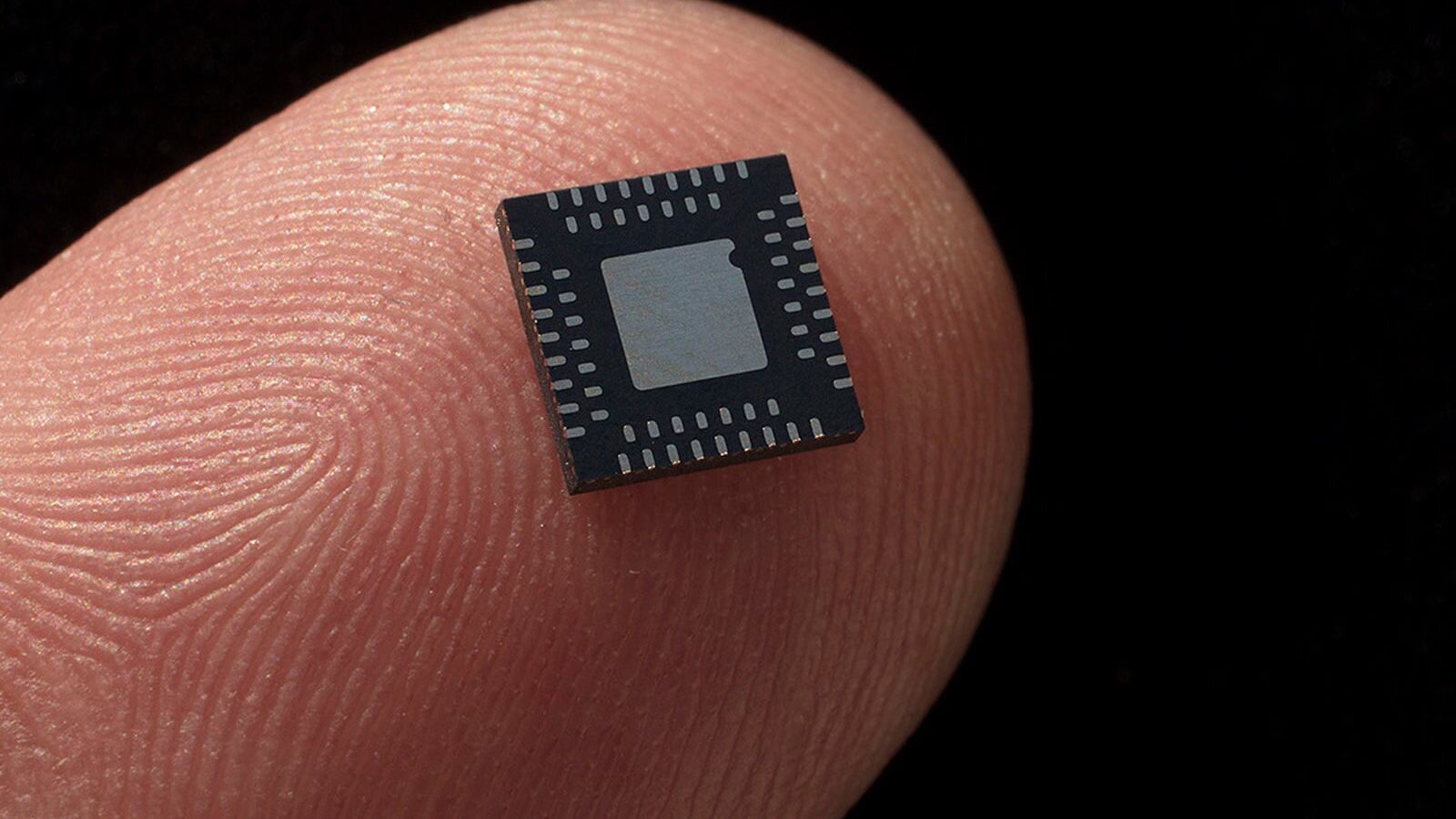
Arm AGI CPU crushes AMD in new agentic AI benchmark — but what does its 2x rack-level performance advantage mean for the future of x86 data centers?
Arm’s AGI CPU nearly doubles AMD’s modelled rack-level performance across seven workloads A 24-kW rack accommodates up to 23 Arm servers under the assessment’s assumptions Arm’s rack-level advantage reaches 3.19x in the strongest individual workload Arm’s AGI CPU has recorded nearly twice the modell
<![CDATA[ <article> <ul><li><strong>Arm’s AGI CPU nearly doubles AMD’s modelled rack-level performance across seven workloads</strong></li><li><strong>A 24-kW rack accommodates up to 23 Arm servers under the assessment’s assumptions</strong></li><li><strong>Arm’s rack-level advantage reaches 3.19x in the strongest individual workload</strong></li></ul><p>Arm’s AGI CPU has recorded nearly twice the modelled rack-level performance of AMD’s EPYC 9755 across seven workloads designed to evaluate agentic artificial intelligence.</p><p>The assessment, conducted by <a href="https://signal65.com/research/ai/arm-agi-cpu-performance-rack-scale/" target="_blank" rel="nofollow">Signal65</a> with Arm’s cooperation, compared measured processor results before estimating performance across racks operating within a fixed power budget.</p><p>The findings rely partly on power-based modelling, while testing on final production hardware remains outstanding.</p><h2 id="rack-density-gives-arm-a-substantial-advantage">Rack density gives Arm a substantial advantage</h2><p>The assessment examined workloads involving software tools, autonomous task execution, information retrieval, and support for AI model serving, including Terminal-Bench 2 and SWE-bench.</p><p>Across the seven tests, Arm’s <a href="https://www.techradar.com/news/best-processors">processor</a> achieved an average performance ratio of 1.99x, with individual results ranging from 1.43x to 3.19x compared with AMD’s EPYC 9755.</p><p>The modelled advantage partly comes from differences in server power consumption, allowing more Arm systems within the same electricity allocation.</p><p>A 24 kW rack could accommodate 21 to 23 AGI CPU servers, compared with 13 dual-socket EPYC 9755 systems.</p><p>That configuration provides between 5,712 and 5,888 physical cores for Arm, compared with 3,328 for AMD, although the comparison depends on the rated power assumptions.</p><p>Individual server power ranges from 950 to 1,050 watts for Arm’s systems, while AMD’s dual-socket configurations carry a rated consumption of 1,700 watts.</p><p>Across workload categories, Arm recorded modelled rack-level advantages averaging 1.7x for tooling, 2.0x for agentic workflows and 2.2x for reasoning and planning.</p><p>The report also estimated that database and vector-search operations could require 30% to 35% fewer racks for equivalent processing workloads.</p><h2 id="faster-sandbox-creation-and-the-x86-challenge">Faster sandbox creation and the x86 challenge</h2><p>Separate testing compared Arm’s processor against AMD’s EPYC 9965 using Sandbench, which measures the time required to establish isolated execution environments.</p><p>Arm completed cold starts 45% faster, warm starts 27% faster, and its worst-case scenario under fourfold oversubscription 41% faster.</p><p>These improvements matter because AI agents frequently create execution environments while accessing services, running code, and processing information.</p><p>Faster setup can reduce delays, although the results do not demonstrate equivalent gains across all applications or complete <a href="https://www.techradar.com/pro/best-data-center-proxies" target="_blank">data center</a> deployments.</p><p>Arm executive vice president for Cloud AI Mohamed Awad said, “The industry needs to measure how well systems handle the work agents actually complete,” describing the need for workload-specific performance evaluation.</p><p>The company developed its evaluation framework with support from Fujitsu, Meta and OpenAI, while Signal65 independently verified the reported processor results.</p><p>Arm also acknowledged that further testing on final production systems would cover additional workloads and competitive comparisons.</p><p>For AMD and Intel, the findings suggest that Arm-based servers could challenge x86 infrastructure in agentic AI deployments where rack power limits constrain computing capacity.</p><p>Higher rack-level performance could let operators accommodate more AI workloads within existing power allocations.</p><p>However, the benchmark does not establish that Arm will outperform x86 across general-purpose computing or justify replacing existing servers across entire data centers.</p><p>Software compatibility, deployment costs and real-world operating conditions will influence whether the modelled advantage translates into wider adoption.</p><figure class="van-image-figure inline-layout" data-bordeaux-image-check ><div class='image-full-width-wrapper'><div class='image-widthsetter' style="max-width:676px;"><p class="vanilla-image-block" style="padding-top:31.51%;"><img id="diM9tpwF2Lz85R8q85CT78" name="tr-g_news" alt="Google logo on a black background next to text reading 'Click to follow TechRadar'" src="https://cdn.mos.cms.futurecdn.net/diM9tpwF2Lz85R8q85CT78-1920-80.jpg" mos="" align="middle" fullscreen="" width="676" height="213" attribution="" endorsement="" class="inline"></p></div></div></figure> </article> ]]>
Read the full article on TechRadar
Read Full Article →